 Download PDF
Trope
n.
- A named, recognizable plot device or feature that raises expectations about the direction of the plot or character interactions.
- A tag that references a recognizable plot device and serves as a keyword for reviewing, promoting, and cataloguing books. Such tags can be incorporated into a book’s paratext to draw readers by evoking anticipatory pleasure or steer them away from plot devices they dislike.
Discussion
Currently, there is no “official” definition for the word trope as used in popular culture and, more specifically, the online romance community. Moreover, the dictionary definition of trope differs so sharply from modern use that it might as well be a homonym. The closest available description, offered by the website TV Tropes, is too general for the purposes of popular romance.
In the world of genre romance, tropes are flexible, generative plot devices that invite comparison, variation, and even reversal from their use in previous texts. A trope’s value depends upon its familiarity, legibility, and portability, making tropes a marker of intertextuality. The concept behind an individual trope must be sufficiently coherent to be conveyed in a few words (e.g., “only one bed,” “friends to lovers,” or “grumpy/sunshine”).
Readers, writers, and publishers draw on tropes for multiple purposes, including narrative play, marketing, recommending, and cataloging. In this regard, the trope is an essential feature of the romance genre world in the 21st century. Tropes thrive in the interaction and immediacy offered by the internet, perhaps especially thanks to self-publishing and social media communities and influencers. The surging visibility of the popular romance, including the rise of the romance bookstore—both online and brick-and-mortar—has also bolstered the use of tropes, elevating the most popular with dedicated sections and merch.
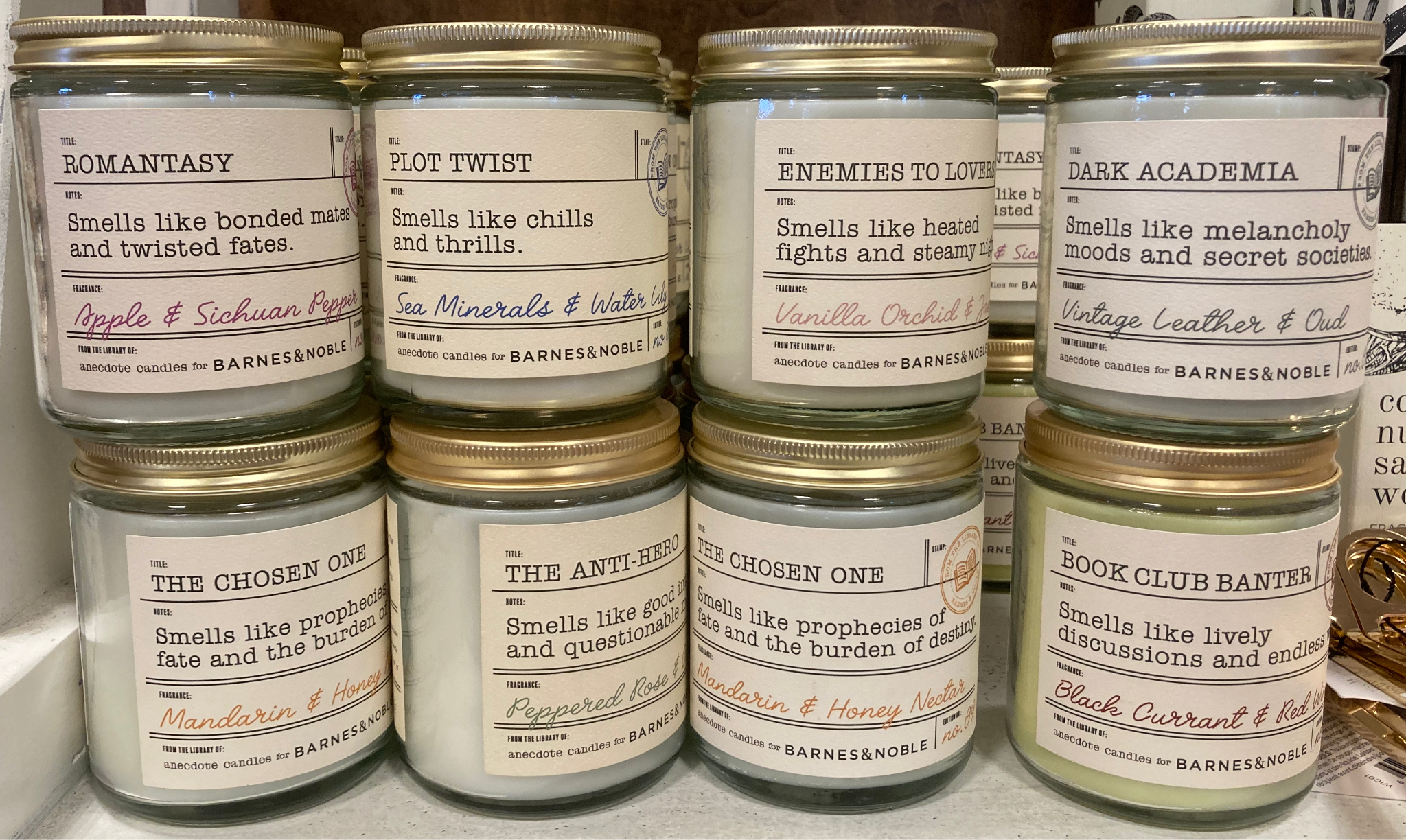
As a method of analyzing narratives and cataloguing books, the trope is a shared, crowd-sourced concept. Tropes emerge from the authors, publishers, readers, and influencers who comprise the genre world of popular romance. A romance trope cannot exist in a single novel, nor does it exist until it is named and identified. For example, in J. Buchan’s The Thirty-Nine Steps (1915), when Richard and Pamela are handcuffed together and forced to share a bed in a remote inn, Buchan was using neither the “chained heat/bound together” trope nor the “only one bed” trope; now, however, the book is shelved along with S. Kenyon’s Night Pleasures and V. Wessex’s Handcuffed to the Stockbroker (n.d.) in Asteropê’s Goodreads list “Trope: Handcuffed/Bound Together.”
Tropes are understudied, possibly because when scholars hear “trope” they think of formal academic uses of the term.[1] Also, traditional literary analysis privileges original interpretations by credentialed readers of individual texts and authors, not shared interpretations emerging from an unvetted public. Romance tropes might also strike literary scholars as too much like “mass culture”—mass-produced, standardized products that dull consumers’ minds—which the Frankfurt School[2] framed as the antithesis of creativity and intellectual engagement. That critical lens fits well with some aspects of twentieth-century romance publishing (if not its authors and readers), such as the profit-motivated, branded system of mass distribution that Harlequin Enterprises devised in the 1970s. Today, the negative association of popular romance with “a damned mob of scribbling women” producing what critics saw as lowbrow trash (thank you, Nathaniel Hawthorne) has lessened but not disappeared, and, in its shadow, the popularity of romance tropes may appear to be nothing more than an advertising gimmick abetted by Tiktok influencers. However, the romance genre world of the 21st century is not the place Horkheimer and Adorno described; instead, the top-down publishing model plays a diminished role, while author-entrepreneurs, independent bookstores, and engaged reader-critics shape new directions for the genre. Trope-themed mugs and t-shirts aside, discourse about tropes is a complex phenomenon. Tropes are valid expressions of interpretation and critical work that emerge from the romance genre world. Even the ability to participate in discussions about romance tropes requires expertise in the genre. While genre world expertise differs from academic expertise, it requires a similar discursive consciousness.[3]
On this project’s purpose, authors, and process
This definition was drafted during a 2025 workshop, Redefining the Trope, at the Popular Culture Association’s annual conference. Romance authors, faculty, graduate students, independent scholars, and librarians all contributed ideas to a lively discussion of the trope, which continued online after the workshop. As the workshop organizer, I organized and synthesized the notes. I am extremely grateful for the expertise and insight offered by my colleagues. I only regret that I wasn’t able to include all the nuance, detail, and lovely wording from our multi-authored draft.
Because romance tropes are shared concepts identified by the romance genre world, we thought it was appropriate for our definition to emerge from collaboration as well. We hope our definition can be a resource for scholars to cite when they want to point readers toward a clear, accurate description of the romance trope. Our definition is descriptive rather than prescriptive, limited rather than broad, and contemporary rather than historic. In some future year, our definition may be outdated. The meaning of the trope for popular romance has changed over the last 20 years and is likely to continue evolving. Meanwhile, we invite romance scholars to investigate romance tropes and the work they do. Possible research avenues might include mapping the origin of specific tropes, including the role played by different constituents in the Anglosphere romance genre world; comparing the relative popularity of different tropes through content analysis; using case studies to discover how different generations of readers select romance novels; embarking on a cross-cultural comparison; and exploring authors’ use of tropes as a form of purposeful intertextuality.
[1] For example, the 2018 Oxford Companion to the English Language defines trope as a figure of speech, such as a metaphor or metonym. Hayden White’s understanding of tropes, as developed in Metahistory (1973), is closer to the romance trope, as both versions have a powerful effect on narrative. However, the usage differs dramatically, not least in the way that the history-telling tropes White critiques are invisible to their readers, who mistake trope for fact. In contrast, a romance trope is appreciated by its readers for its fictional—and sometimes even stagy—qualities.
[2] See Adorno and Horkheimer’s discussion of the culture industry in The Dialectic of Enlightenment (1947).
[3] In The Constitution of Society (1984), Giddens[4] draws a distinction between “practical” and “discursive” consciousness. The first refers to routine actions we can perform without conscious effort, such as writing grammatical sentences in our first language or dressing appropriately for work. The second indicates an ability to reflect on and explain those actions, much as we like to see students do when we ask about their essay revisions. Turning to romance, readers might demonstrate practical consciousness when they race to buy the latest Tal Bauer or Sarina Bowen title; discursive consciousness would show if they could explain why hockey plays so well in romance, perhaps by noting that the adrenaline rush of high-stakes physical competition between rival teams pairs nicely with the enemies-to-lovers trope.
[4] Note: If you’re in the mood to read something by Giddens, I’d recommend skipping the tome I cited and reading his much livelier 2013 work, The Transformation of Intimacy: Sexuality, Love and Eroticism in Modern Societies.
Works Cited
Giddens, Anthony. The Constitution of Society: Outline of the Theory of Structuration. Polity Press, 1984. Print.
“Trope (Turn of Phrase).” The Oxford Companion to the English Language, edited by Tom McArthur, Jacqueline Lam-McArthur and Lise Fontaine. 2nd ed. Oxford University Press, 2018.
White, Hayden V. Metahistory: The Historical Imagination in Nineteenth-Century Europe. Johns Hopkins University Press, 1973. Print.